Wednesday, 9 September 2015

The Public Questions...and the 'best interests of the people of Carmarthenshire' - updated


Update 10th September;
I asked Plaid Cymru AM Rhodri Glyn Thomas for a reaction to the reply I received yesterday from Mark James deputy leader Cllr Jenkins (Plaid). Mr Thomas' comments in June that 'serious questions' were 'inevitable' had formed part of my question to Cllr Jenkins.
He replied promptly and disagrees with the claim made yesterday by the deputy leader that the deal was in the best interests of the people of Carmarthenshire;

"I maintain my position that taxpayers should get the best possible return on the sale of any assets, and I don’t personally believe that getting the equivalent of 25% for an asset is the best return the council could have achieved."
That said, when the decision has been scrutinised by the Wales Audit Office, I'm not in a position to disagree that the sale wasn't ‘above board’ as it were.
With local government funding being cut to the bone, I sincerely hope that any sale of public assets in the future gets a better return for the taxpayer than the deal in question."
Rhodri Glyn Thomas

Although I can understand that Mr Thomas is not in a position to disagree with the Wales Audit Office, I can disagree with them and as a footnote to this, I firmly believe they got this one badly wrong. The whole thing stank and bordered on fraud, as outlined below.

--------------------------------------------------------------- 

There were three public questions at today's full council meeting, one from me and two others, the first for ten years. I was there, but the two other questioners were unable to be present. Their questions concerned the plight of elderly vulnerable people in Carmarthen and also the lack of provision for teaching Welsh to children who have recently arrived in the area.

Unbelievably, the Chair, Cllr Peter Hughes Griffiths (Plaid) chose, undoubtedly 'in conjunction' with the chief executive, not to read the other two out at all. They will receive a written response in due course.

He claimed that the constitution "expects that the questioner will be there", this is not strictly true as the constitution also gives him the choice to read the question out. A response could have been given and the matter aired.

After all, the very same constitution describes the council as a "forum for the debate of matters of concern to the local community" and that it should "support the active involvement of citizens in the process of local authority decision-making". What a joke.

This was a missed opportunity, and makes public questions pointless unless you are able to take time off work, or other commitments, and goes to the very heart of the 'culture change' which was so desperately needed, and which clearly hasn't happened.

As I was there, I was able to pose my question (sent in ten days ago), which was;
“Plaid Cymru AM Rhodri Glyn Thomas stated in June that “serious questions” will “inevitably” be asked over the decision to shortchange Carmarthenshire residents over the sale of a council asset and pay off a £274,000 loan on behalf of a private company, Scarlets Regional Ltd.   
The club ended up with £650,000 and the taxpayer £200,000 from the deal.   
Documents disclosed by the Council under the Freedom of Information Act revealed there was disagreement among officers within the authority over the deductions but their objections were overruled by a senior officer.   
Given that many other private businesses in Carmarthenshire are struggling to stay afloat and pay off their loans, will the executive board member agree that the decision was not in the best interests of the people of Carmarthenshire and finally ask those serious questions?”

I had, of course, predicted what the response would be, but it was even worse than expected. In fact, I do not think that Cllr Dai Jenkins (Plaid) himself believed what had been written for him to read out. Surely not.

He responded by saying that the District Valuer had been responsible for the split and that the Wales Audit Office had ok'd the deal. I was well aware of the WAO's view as I had made the complaint to them.
The District Valuer's role, although involved in negotiations between the parties, was to determine the final split, after the deductions.
His response had nothing to do with the 'allowable expenses' I'd referred to in my question.

The unexpected remark was that this deal WAS in the best interests of the people of Carmarthenshire and that he wouldn't be asking any 'serious' questions. It doesn't bear thinking about. Not sure what his colleague Rhodri Glyn Thomas (here he is in the Western Mail a few weeks ago) will make of it all either.

I know I have written about this many times but given my question, and the response, today I think I need to make it clear exactly why I believe this was a very, very dodgy deal. And I know I wasn't the only person in that Chamber today who feels the same.

Cllr Sian Caiach had tried unsuccessfully to obtain the details of the deductions in 2013. Eventually, Cllr Jeff Edmunds (Lab), who was, at the time, the Executive Board Member for Finance, decided to give Cllr Caiach the details, against the wishes of the chief executive. This was to his credit.

I then made a FOI request for correspondence between the parties leading up to the deal. This was initially refused. I appealed the refusal, the decision was reversed and I was given the information. This reversal happened to coincide with the chief executive's enforced absence during the criminal investigation last year.

I believe the disclosure was a deliberate move to exonerate (rightly) the (now retired) Director of Resources and the Head of Corporate Property, who had been delegated to finalise the deal, from blame.

The full FOI response can be seen here, and shows that the two officers were determined to secure a good deal for the taxpayer and to try and stop the 'allowable expenses' to pay off the loan. They also argued against thousands of pounds worth of other 'allowable expenses', eventually in vain.

The Head of Corporate Property's submission to the District Valuer. HDD are Henry Davidson developers to whom the Scarlets owed the loan.

The view of the Council's director of Resources

The final email shows that despite their efforts, and despite being delegated to finalise the deal, they were overruled by the chief executive.


The day before the deal

So today, according to Cllr Jenkins, deputy leader of the council, and of course your chief executive, £200,000 to the council and £650,000 to Scarlets Regional Ltd was in the best interests of the people of Carmarthenshire. I find that staggering. As I said, I do not believe Cllr Jenkins wrote the reply today, but I think I know who did. It was disappointing that he was happy to read it out.

In simple terms, the council sold off your land and paid off a loan for a private company...do you think they'd do that for your struggling business? I suggest you ask.

The Western Mail have published a comprehensive report this afternoon; Council deputy leader denies that taxpayers were 'shortchanged' over Scarlets land deal

I got back from Carmarthen just in time to catch the end of the meeting and the Chair joking with a councillor that "as long as you praise the council, I'll allow you to carry on". It may have been meant as a joke but it says it all really.

The meeting has now been archived and 'public questions' starts at 00:38:16.

Sunday, 6 September 2015

The Constitution and siege mentality


Next Wednesday's council meeting (9th Sept) is set to approve the limited changes to the Constitution decided at the Extraordinary meeting in June.

Readers will recall the background to this. The changes follow the recommendations of the Council's cross-party group which was set up (and met behind closed doors) to deliberate the WLGA Governance recommendations....

The WLGA Governance Review was required following the Wales Audit Office reports exposing the pension and libel indemnity scandals relating to chief executive Mark James.

The process has been unnecessarily tortuous and long-winded.

The WLGA recommendations, hardly revolutionary in themselves, were supposed to be all implemented within a three to six month time limit. The report was issued last November, so you can see there's been no great rush...

The constitutional changes to be approved on Wednesday, (agenda here, to save you attempting to locate it on the council's new website), are likely to be seen as the final stage in the process, whereas they are actually just the start.
In part, these changes reverse some of the more bizarre rules brought in over the past few years to silence debate, and were not going to survive even the most cursory inspection.

The 'seven seconder' rule for councillors to submit Motions on Notice to council will finally be reversed back to the normal proposer and seconder. In other words two instead of an astonishing eight. Just in case there's a sudden onslaught of Motions (unlikely) councillors will be limited to one each per meeting.

Councillors will now be able to ask questions at open Executive Board meetings. As for remaining for, or receiving, exempt reports (such as top secret public toilet dossiers..), after a lot of moral grandstanding at the Extraordinary meeting, this will be now limited to Chairs and Vice Chairs,..

The chief executive will no longer be able to avoid airing public petitions by sending them off to distant committees, they will now have to go to full council, or at least full council will be made aware of them should the petitioner wish to present it to another committee.
However, we're still waiting for the promised council's petitions page to materialise on their website...

Neither will the chief executive be able to refer Members' Motions on Notice elsewhere, they must go on the council agenda and not be passed quietly to Pam, Meryl or similarly obedient disciples. Although I'm sure, with Mr James' extensive experience, he will be able to find a way round that one, if necessary...

Any three councillors will now be able to call-in an Executive decision rather than a majority of scrutiny committee members, and they will now have five days from when the Executive decision in question has been published on the council website to make their request.

As we know, Public Questions' is now an official slot for full council meetings. From now on the Executive Board and Scrutiny Committees will also have PQs on their agenda. The rules for submitting and asking a question remain the same despite the WLGA recommending that the procedure should be simplified.

Councillors will now be allowed to ask a Supplementary question. You may recall that the Mark James and Legal Linda double-act decided that because the constitution did not mention follow-up questions for councillors, then they weren't allowed.
It could have been interpreted the other way of course (after all I don't think there's a democratic institution in the western world which doesn't allow this) but why make things easier? The effect was that councillors have had go through the palaver of voting to suspend standing orders every time they asked a question, just so they could ask a follow-up.

The WLGA recommended that the public should be able to film or record all open meetings, quoting the decision from Pembrokeshire. This, as we know, was a step too far for some, resulting in the ridiculous decision to only allow filming of meetings which are already being webcast. Hardly in the spirit of transparency.

Attempts by the Plaid leadership to embrace the spirit of the recommendation were defeated. Currently, only full council and planning meetings (and, in the near future, apparently, Executive board meetings) are webcast which leaves around fifteen other committees which cannot be filmed and which are not recorded.

The public questions on Wednesday's agenda - see Caebrwyn asks a question - are nothing revolutionary, the ability to ask has always been in the constitution. The great unwashed have been discouraged, in a passive aggressive, and sometimes, as I discovered, a very aggressive way, from entering the Hallowed Halls, let alone asking a question.

The problem at the moment is that eyes are on Carmarthenshire, including those of the Wales Audit Office who are carrying out a full corporate assessment, not least of all on matters of governance. I'm sure it would have been noticed and challenged if those properly worded public questions had disappeared into the Presidential Shredder.

The dire relationship between County Hall and the press was also recognised in the WLGA review. A revised Press and Media Protocol finally emerged; a missive from the Ministry of Spin which I covered here.

The unlawful libel indemnity clause looks likely to remain in the Constitution in suspended animation. As I said in February, it will linger for evermore as an impotent but lasting memorial to local government idiocy.

I thought perhaps, with the 'legal position' long since 'clarified' as quite simply, 'illegal', the suspended libel clause would be quietly removed, its final deletion hidden, without mention, amongst the raft of changes; rather like the method used when it was first brought in; unnoticed and unmentioned within hundreds of pages of amendments. It seems not.

Both this blog, and Cneifiwr's of course, have tracked the snail like progress since the WAO reports, and both made lengthy submissions to the WLGA Review panel. The piecemeal and reluctant developments are detailed throughout both blogs. Another significant submission to the panel came from the lay member of the Audit Committee.

The 39 recommendations should have been implemented in full after the WLGA report instead of which they were diluted and twisted, and overseen by the very people responsible for the mess in the first place. It was a rather different 39 which finally emerged.

The recommendation for a change in culture, including an end to the officer-led regime, was swiflty and smugly brushed aside many months ago.
The chief executive made no secret of his contempt for the review, and for the Wales Audit Office. The logical conclusion is that he considers scrutiny of governance and democratic participation with the same patronising contempt.

We must be thankful for small mercies I suppose, and some of the changes are indeed very welcome, but what we actually have is transparency, Carmarthenshire style. If there is a theme which emerges from all this, it is defensiveness, mistrust and the council's siege mentality. The public are not to be trusted, and neither are backbench councillors.

It falls a very long way from bringing in the promised change of culture and the self-professed aim of becoming the most open council in Wales.

Carmarthenshire Council - Another six red cards


As I reported back in February, (see Six Red Cards) the claim, often made by our Glorious Leaders, past and present, that Carmarthenshire Council is the 'Best in Wales' and the envy of the western world continues to be something of a fantasy.

Data Unit Wales has just published it's latest Local Government Performance tables for 2014 -2015 and grades local authority performance and improvement by selecting twenty four specific areas of service (Indicators) for comparison.

Overall, for Carmarthenshire, the results are a mixed bag and can be best described as 'average', and certainly not the best in Wales. If the targets had included poor governance and corporate spin, then they'd have been out on top.

The council press office has already been at work trumpeting improved school attendance figures from Welsh Government data released last week. They are unlikely to trumpet this week's figures for delays over issuing Statements for Special Educational needs, in which they are bottom of the class;


There's has been another press fanfare this week over the Council's empty homes policy which has brought 135 homes back into use in the last year, this is good although disappointingly only a quarter of them were 'affordable'. But if this chart below is anything to go by, the fanfare should really go to Neath Port Talbot Council.


So, for the information which won't be available on the Council's 'Newsroom' website, Carmarthenshire has six red cards, and out of 22 local authorities is amongst the worst performing in the following;

Issuing final statement of Special Educational need within 26 weeks; 22nd (bottom of the league)

Adult social care clients supported in the community; 17th

Timely annual review of care plans; 20th

Delayed transfer of care ('bed-blocking'); 18th

Roads in overall 'poor' condition; 18th

Public participation in sports at local authority venues; 19th

A further five indicators are 'amber'.

A link to the full report can be found here.


Thursday, 3 September 2015

Caebrwyn asks a question - the September agenda


Well, for the first time in living memory (almost) there are three Public Questions on next Wednesday's (9th September) full council agenda, and this one is mine;

6.2 QUESTION BY MRS JACQUI THOMPSON TO COUNCILLOR DAVID JENKINS, EXECUTIVE BOARD MEMBER FOR RESOURCES
"Plaid Cymru AM Rhodri Glyn Thomas stated in June that 'serious questions' will 'inevitably' be asked over the decision to shortchange Carmarthenshire residents over the sale of a council asset and pay off a £274,000 loan on behalf of a private company, Scarlets Regional Ltd. The club ended up with £650,000 and the taxpayer £200,000 from the deal. 
Documents disclosed by the Council under the Freedom of Information Act revealed there was disagreement among officers within the authority over the deductions but their objections were overruled by a senior officer. 
Given that many other private businesses in Carmarthenshire are struggling to stay afloat and pay off their loans, will the council leader agree that the decision was not in the best interests of the people of Carmarthenshire and finally ask those serious questions?"

Regular readers may recall the background to this which was a deal between the Council and Scarlets Regional Ltd to sell off a piece of land, and particularly the controversy of the 'allowable expenses' deducted prior to the split.

Rhodri Glyn Thomas raised the issue again a few weeks ago in the Western Mail.

The documents I received under the Freedom of Information Act last year were at odds with the council's claim that it was the District Valuer who made the decision, and showed, as the Western Mail reported;

"They showed that Jonathan Fearn, the council’s head of corporate property, and Roger Jones, the council’s director of resources, were unhappy with the Scarlets’ proposal that around £260,000 of the proceeds should be used to pay off the loan it had taken out to fit out the Red Room. 
But the council’s chief executive Mark James overruled their objections."

I have confirmed with the council that I will attend the meeting to put my question to Cllr Dai Jenkins (Plaid) and I understand that he will be present to answer it. I can also ask one supplementary question, should I wish.

Disappointingly there are no questions from Members on the agenda even though there has been a summer break and there are fifteen committee reports for 'noting'.

There is, however, another dreaded Powerpoint presentation, this time about Superfast broadband.

Finally, the amendments to the constitution agreed at June's Extraordinary meeting make an appearance.
More on that in due course.

Offloading Leisure Services - No opposition? - updated


Update 8th September;

The agenda for the Community Scrutiny Committee (14th Sept) has now been published (here) and includes the detailed 'Alternative Management Options for Leisure' report by RPT Consulting.

It looks like the recommendation is to initially offload Sports & Leisure and theatres to an existing trust company following a procurement exercise. There appears to have been little interest in taking over the less commercially viable archives and museums, but these will be considered at a later date.

----------------------------------------------------------------------------------

The Carmarthen Journal and the Llanelli Star have this week picked up on the council's plans to outsource leisure services to charities, trusts or arms length companies.
I have been reporting on developments since October last year, and in February, and last Friday.

Anyway, the papers have a quote or two and Council leader Emlyn Dole doesn't sound particularly averse to the idea and neither does the opposition. It's just as well really as the wheels are already in motion, £30k+ is being spent on an external consultancy to sift through the interested parties and the award process is due to start in February.

Cllr Dole also states that, whilst they need to think 'creatively' (this is the latest buzzword instead of the less publicly palatable 'outsourcing') 'no assets' will be sold off. Given the current policy of selling off anything which isn't tied down this is a promise which will be difficult to keep. Presumably if (or rather 'when') they are, he will ensure a better deal for the Carmarthenshire taxpayer than the chief executive did over the Martson's deal.

Just to remind readers, 'Expressions of interest' have been invited for the whole leisure department and includes leisure centres, theatres, country parks, museums, libraries, the archives, etc.

It is a pity that not only is there no effective opposition - vital for scrutinising executive decisions - but the new leadership seems willing to remove the leisure department from the auspices of democratic control and proper scrutiny (albeit Carmarthenshire style), to trusts or arms length companies.

More importantly, it is becoming increasingly obvious that neither Cllr Dole, nor the weak opposition have any effective say in the future of council services, nor the many council jobs which will be at risk. Neither do they have the stomach, nor even the desire, to rock the officer-led regime.

There are murmurings of dissent and one Labour councillor has promised to 'demand reassurances' at the next council meeting that Pembrey Park will not be offloaded (the agenda has just been published and there's no sign of a demand). Anyway, as part of Mark and Meryl's original Masterplan, plans to offload the country park have been around for years.

The final decision will be based on an officer's report which will offer no other 'realistic' option aside from the one which has been happily germinating for the past eighteen months.
That officer's report is now doing the rounds of various committees before heading to full council later in the Autumn.

The council needs to make savings, we are aware of that, and it is likely that non-statutory services will be the first to go, whatever the massive up front costs of setting up trusts, charities or companies are. But the real worry is that if the Parc Howard and Archives fiascos (and all the other fiascos too numerous to list) are anything to go by, transparency, good governance and due diligence are unlikely to be particularly prominent.

Wednesday, 2 September 2015

Solar panels and historic settings...


A recent row over the council's refusal to allow a homeowner to keep solar panels on his barn roof continued today on BBC Wales news (not online). The row centres around the fact that the dwelling is a listed building and although the barn is not listed, it is within the curtilage. The homeowner, a Mr Bazalgette has also lost a planning appeal and will eventually be forced to remove the panels.

The question is whether or not solar panels are detrimental to the historic setting, something of a subjective view, and this case has highlighted the inconsistent and muddled approach taken by different local authorities. Carmarthenshire council, meanwhile, has said that it will continue to take a 'balanced' approach, whatever that might mean.

I'm not quite sure what the council's current interpretation of 'balanced' is, but perhaps, as a basis, they should take into account their decision in 2011 to let the chief executive put solar panels on his cowshed roof, also in the curtilage of a listed building, and in a Conservation Area. The application was in his wife's name.

Surely, on balance, that should mean the all-clear for Mr Bazalgette. Or are chief executives' curtilages different from everyone else's?

Friday, 28 August 2015

Affordable Homes - The 'Journey'


The Autumn Term at County hall kicks off on Tuesday with an Executive Board meeting. The new (well, not so new now) Plaid leadership can settle in for the long winter warmed by the company of new buddies Meryl and Pam, with Mr James still firmly in charge. It will be hoped that talk of demolished barns will fade with the last remnants of summer, along with the dimming memories of that Extraordinary meeting where toxic cultures and failed governance were quietly disposed of via Powerpoint...

Talking of warmth, or hot air, Tuesday's meeting includes a report titled, comfortingly, 'Our Commitment to Affordable Homes 2015-2020' and follows on from an earlier report that among Welsh local authorities, Carmarthenshire Council ranks second from bottom in the delivery of affordable housing units.

The cosy theme continues inside with Cllr Linda Evans (Plaid) inviting us all on a 'Journey' (presumably in the Carmarthenshire Council Robin Reliant) of discovery, and reads more like a manifesto than a policy document, peppered with bullet points, cliches and promises, but little meat.

The Council predicts that around 2000 affordable homes will be needed over the next five years, with the supply over the previous five years averaging around 69 per year. There are currently 7000 on the register for social housing.

The report admits that little is understood with regards to demand for affordable housing in rural areas. Given the largely rural nature of the county this is inexcusable. In addition, the Local Development Plan, along with its Supplementary Guidance on Affordable Housing finally made its tortuous way to adoption last December after several years of development and scrutiny; local rural housing issues must have passed it by.

However, demand for affordable homes are obviously highest in the urban areas, Llanelli in particular, and yet the LDP guidance is that only 10% of homes on new development should be affordable. In contrast, in the rural north for instance where there is less demand and any developments are usually very small, the quota is 30%.

The delivery of affordable homes through the planning system is something of a joke and as the report states, the obligation to provide below market-price homes is only insisted upon "as long as this is financially possible". As previously reported (and also an example in London here) 'viability appraisals' are being used more and more to reduce S106 contributions.

The council themselves hardly set a 'committed' example. Only a couple of weeks ago the council put forward it's own plans appearing to split a small site in two to avoid providing an affordable dwelling. The Stradey development in Llanelli of 350 homes had no affordable housing at all despite local demand; the S106 contribution went to Scarlets Regional Ltd and the stadium.

The current mishmash of methods to deliver affordable housing, rented or owned is not going to deliver the numbers required. The lengthy saga of the Brynmefys Estate, also in Llanelli saw the potential for affordable housing drop from eighty in the council's 'empty homes strategy' in 2005 to a meagre fourteen earlier this year, and the report only devotes one line to the council's own attempt to build council homes - you might remember Kev's 11 bungalows which went massively over budget - which suggests that further attempts in that direction are unlikely.

No aspirational report such as this would be worth its salt without the phrase 'developing innovative and creative ways to deliver more' This typically translates to 'we haven't got a clue at the moment but hopefully someone will come up with something' and it usually infers a trip into outsourcing territory.

In fact it has already been decided to put together a business case with a view to set up an external company, wholly owned by the council, to deliver affordable housing. The council contends that such an organisation could attract funding which the council couldn't. If it was capable of attracting extra funding and investment this suggests it would need to be run at a profit; so not necessarily compatible with local and sometimes sensitive and specialised housing needs, and far from transparent.

Companies are currently expressing their interests in the running of the entire Leisure Department, from swimming pools to the Archives; country parks to libraries. The award process, possibly a trust, will start next February. To make it even less transparent the council have even outsourced the company to sift through the interested parties.
It looks like the Housing Department may well be next in line...

Back briefly to the agenda and despite news of record parking profits, the long awaited 'free parking pilot' which was 'urgently' referred to the Board, after cross-party approval, around four months ago is notable for its continued absence. Maybe next time eh?

I also note that Tuesday's meeting is not being webcast, despite a promise back in June. Along with a raft of other WLGA recommendations, this was supposed to be implemented within three months, ie January 2015. Let's hope its sorted for the next one. Although with the actual decisions being taken in the pre-meeting meetings and post-meeting briefings, the bit in the middle, for public viewing, is essentially cosmetic.

Saturday, 22 August 2015

Asking a Public Question...


It has been almost a year since I last wrote about Public Question Time at full council meetings, or the lack thereof. This week's Herald has also tried to offer words of encouragement to curious members of the public who might want to pose a question. 

The last time a member of the public put forward a question was in 2005, (and there were none for several years before that). A gentleman enquired about the the council's promotion of local sustainable food sources. It was all far too much and when it became evident that the questioner did not live nor work in the county, the constitution was hastily amended to prevent 'outsiders' from asking any more.

As you can imagine, public questions have never been encouraged, nor welcomed but the facility to do so has always been in the constitution. It was only after the WLGA review that it now finally, but reluctantly, appears as an agenda item.

The WLGA recommended that public questions be 'promoted' but of course that hasn't happened. And no questions have been asked.

The bastion of defence for County Hall is the palaver a member of public has to go through to ask. There is nothing obvious on the council's new website such as 'click here to submit a question to full council' which might take you to a page of simple instructions and an online form.
Good grief no.

I typed 'ask a public question' into the search box and this brought up numerous results from 'public toilets' to, inexplicably, 'Cooling towers/Evaporation condensers', but not 'public questions'.

The Herald reports that its own efforts to pose a question led them stumbling, eventually, to the Democratic Services Unit who offered them a few alternative email addresses in the hope that one of them might work. It doesn't bode well.

Currently, the actual details can only be found in the Constitution, Part 4 (1); Standing Orders Part A, CPR 10.1 to 10.10. (See what I mean? So here's a link) and your question must go to the chief executive.

Finding the instructions could be said to be the easy part. You then have to get your burning question onto the agenda. Your written question (by post or 'electronic' mail, with your name and address included of course) must land on the Chief Executive's desk seven working days before the meeting.

He can then decide to accept, or reject the question if he deems it frivolous, defamatory or offensive. (This is the person who was offended by enquiries about publicly funded officers' expenses...) It also has to be related to council business and not have been raised at a meeting in the past six months.


You must also direct it to the correct Executive councillor who holds the appropriate portfolio relative to your question. (everyone knows that..er..don't they?) and not relate to possible confidential/exempt information.

If you are fortunate enough to be aware of every issue raised in council meetings over the past six months, and the chief executive has decided it is a) bland enough to be asked in front of webcams and the press, b) easily replied with the requisite spin, then we can move on to stage two.

So it's on the agenda. As all council meetings are held during the day, a day off work might be required if you want to put your question in person. If that is the case then you just hope that the councillor responding to your question is actually there that day and not conveniently indisposed...if not you will receive an answer in writing several weeks later...

If you can't be there then the Chair can read your question out, or choose not to, it's up to him, and the chief executive.

With seven days notice of your question, senior officers have plenty of time to write the councillors' 'reply' which means that your one Supplementary Question (follow-up) is all important, and obviously can't be posed if you're not there. This can also be rejected if it is considered 'frivolous' etc (see above).

If you've managed to get this far, let's hope you get a straight and informative answer; whether you're there or not. That, of course, is highly unlikely.

Still, don't let me put you off...If you want to ask something go ahead and take it from there. If it is rejected it still has to be logged in a book (available for public inspection during a full moon when there's an R in the month) with the reason for rejection.

Until such time as the council gets round becoming the 'most transparent in Wales', simplifies and promotes public questions on it's website, and offices and libraries...and preferably takes the vetting process out of the hands of that one person, the email address you need to send you question to is;

MJames@carmarthenshire.gov.uk or chiefexecutive@carmarthenshire.gov.uk or by post to;
Mark James, Chief Executive, County Hall, Carmarthen, SA31 1JP.

The next two full council meetings are on the 9th September and the 14th October. Get asking!


The Community Councillor and the wind farm...some thoughts


The local press have all covered the case of Community Councillor Heulwen Lewis who failed to declare a financial interest when the Brechfa Wind Farm was being discussed at a meeting of Llanfihangel ar Arth Community Council, Carmarthenshire.

The turbine company had entered a hefty financial agreement with Ms Lewis over land she owned which formed part of the entrance to the wind farm. She defended her position for two years, only admitting serious wrongdoing at the last minute, which didn't help matters.

She was suspended from meetings for three months (they don't meet until September anyway) by the Adjudication Panel for Wales following a referral by the Ombudsman.

Wales Online has further details.

Ms Lewis is lucky to have got off so lightly, under the new rules in England she could potentially have been facing a criminal charge.

Of course I'm not defending Ms Lewis but Community Councillors (and I am declaring my interest here as a member of another Community Council) are the lowest rank of elected Members and pretty much expendable.
The ripple effect of misdemeanors such as Ms Lewis' naming and shaming are limited to the local rural community, but they don't effect the grand scheme of things.

Further up the food chain, reputations and remunerations become more valuable, whether they're deserved or not, details become cloudy and ranks close.

In the wider context of Carmarthenshire Council adverse Ombudsman reports against the authority are hidden as far as humanly possible. One council tactic has been to attack the Ombudsman, rather like they did with the Appointed Auditor.

To be honest, I don't think the Ombudsman will ever be forgiven by Mr James for telling him to grow up after throwing out his complaints against Cllr Caiach. As Mr James' recent email to Cllr Bill Thomas shows, his threats are now of the legal kind.

If the Ombudsman does find against a county councillor, it never seems to result in a sanction. Most recently the Ombudsman thought Daff Davies 'might' have breached the code over the Dylan Thomas turbine, and Kev's clanger over the press office a couple of years ago saw 'no further action'.

Few incidents ever get reported. I wonder what the Ombudsman would make of Emlyn's Barn? Or Meryl and her dealings over Parc Howard?

What about blacklisting and threatening the press? Or the snooped emails? Dodgy deals defrauding the taxpayer? The toxic culture? Twisted FOI responses or gambling with taxpayers' money? And so on.

Everyone involved in the whole sorry mess over the tax avoidance and libel indemnity scandals managed, somehow, to get through to the other side unscathed. The Ombudsman wasn't involved of course but the potential was there for criminal charges, which undoubtedly should have been brought, particularly against the chief executive.

Anybody reading the council's extended rap sheet over the years would think 'Bringing the council into disrepute' was a favourite pastime of County Hall.

Perhaps Ms Lewis will resign from her Community Council seat, perhaps she won't, but Llanfihangel ar Arth Community Council will drift back into obscurity.

But what of the County Councils? Power corrupts, even within the parochial realms of Community Councils, but absolute power, especially when confined to the hands of any unelected dictator, corrupts absolutely.

Tuesday, 18 August 2015

The Key to the Presidential Toilet


Below is an open letter from Unison Carmarthenshire to Plaid Cymru's Emlyn Dole, Leader of Carmarthenshire Council published in this week's Herald. As you can see, they had to wait two months for a meeting. Perhaps Mr Dole was busy with his barn...

To add insult to injury, chief executive Mark James also decided to grace them with his presence. Unison said;

"Our disappointment was only added to at the meeting that took place in your room on July 22nd when to our surprise Mark James CEO was in attendance. We had not been informed prior to the meeting that Mark James would be present. 

It is our understanding that we requested a meeting with you alone as we wanted to speak with you regarding the future direction of the council led by your party. If we had wanted Mark James to be present we would have requested it"

Whether Mr James had insisted on being there to ensure Cllr Dole stuck to ze masterplan, or whether Cllr Dole didn't feel able to cope without holding his divine guiding hand is not clear. It's quite surprising that Pam and Meryl weren't there as well...

Unison wanted to discuss the political direction Plaid would be taking the council, with the council leader. The councillors are the employers after all and it is supposed to be they who run the show.

It goes to show that recent events, including the WLGA review have made not one jot of difference, the term 'officer-led' is alive and well and remains in the singular.

Unison raised several issues and challenges to Cllr Dole including introducing the Living Wage and opposing cuts, both of which Plaid had campaigned for when in opposition but the meeting produced no commitment from Cllr Dole, nor, for that matter, a firm stance against further outsourcing of services.

They reminded Cllr Dole of the Plaid alternative budget which proposed, a few short months ago, the use of some of the reserves to prevent cuts to services, the response from Cllr Dole was that they would act 'responsibly'; taken to mean that there would be no change of direction, the promises made in opposition have been 'sacrificed', and Plaid would be 'responsibly' implementing cuts.

Unison threw down the challenge to Plaid to protect vital services for the communities they serve but the outcome of the meeting was clearly disappointing; "It seemed to us from what you did and didn't say that Plaid have ditched very quickly any opposition to Tory cuts" 

No doubt Cllr Dole would have been warmly congratulated by Mr James, with a pat on the back, (and possibly the much coveted Key to the Presidential Toilet) for the way he 'dealt' with the meeting...and maybe there was even a congratulatory phone call from a delighted Meryl...


Click to enlarge


Carmarthenshire Herald on Facebook here

Monday, 17 August 2015

Consulting with councillors


As this blog has mentioned before, back in 2013 the Council joined with the developers of the controversial Grillo site, Castletown Estates Ltd to challenge the Welsh Government in court over its decision to refuse planning permission due to flooding concerns.

The council and Castletown failed in their gamble and lost the High Court bid. Soon after this, the flood maps were rapidly amended paving the way for the eventual, and equally controversial, approval earlier this year. It was probably one of the most predetermined applications in history.

The cost to the council of this failed legal action in 2013 was £26,000 not the biggest legal bill that Caebrwyn has seen in recent years but nonetheless an above average yearly income for many Carmarthenshire residents.

This week's Herald has some further details acquired by a county councillor through the Freedom of Information Act. A breakdown shows counsel's fees of £8970, officer costs of £7285 and an order to pay the successful party, the Welsh Government, £10,500.

Even though the site formed part of the masterplan for the wider area, quite why the council decided that the council taxpayers should support private developers in this way remains a mystery.

Worse still, it appears that that there was no consultation with elected members, all the decisions were through delegated power. The Herald names the head of planning Eifion Bowen, and Wendy Walters, then head of economic development, now assistant chief executive as initiating the process but the officer with the final say, and his hands on the cheque book, remains unknown. I'll give you three guesses who that might be.

Of course we are very lucky that we have such legal expertise in out council. I'm sure that the lay member of the council's audit committee was entirely wrong when he described the internal legal advice as cavalier and incompetent...

Mr James has much expertise in the legal workings of local government of course. Back in the day, and before he became chief executive of that lucky Borough of Boston he became their Director of Legal Services.

There were rumours and some disquiet at the time as he was apparently asked by councillors whether he was actually a solicitor, a requirement for the post. Allegedly he told them, without elaborating further, that he had a law degree, which is not quite the same thing of course. Anyway, he got the job. Must have been his charm...allegedly.

There were further rumours, allegations and complaints of exerting undue pressure and even tampering with a document for an Employment Tribunal held under oath. The allegations were, apparently, 'dealt with' and following that, Mr James was elevated to the rank of chief executive...

Of course all that is in the dim and distant past and Mr James currently exercises the depths of his legal mind with trusty Linda Rees Jones at his side, with, as we have discovered, a remarkable ability to survive even when dropping the most dire of legal clangers...

Consulting with councillors over legal matters is always a last resort, and only if a democratic gloss is required to shift the future potential of blame. And only with minimal paperwork of course; carefully prepared to ensure dutiful, unquestioning agreement...

Affordable Housing - The council splitting its sites?


Last Thursday the planning committee approved an application, put forward by the council itself, to demolish a former village school and build four dwellings, a separate proposal for two further dwelling adjacent to the site was also approved.

Mynyddcerrig Primary School

The Council's own Supplementary Planning Guidance states that;

"The affordable housing will be required to be provided on proposals of 5 or more dwellings in
all settlements. Where adjacent and related residential proposals result in combined numbers meeting or exceeding the above threshold, the Council will seek an element of affordable housing based on the affordable housing target percentages set out above". 

It did not go unnoticed at Thursday's meeting that the two plots added up to six dwellings and yet there was no affordable element at all. You might think that after closing and selling the village school a contribution to the community would be the least they could do.

The LDP, adopted by the council last December, aims to provide 2,121 affordable homes by 2021 and promises to try and "maximise the potential of Planning’s role in gaining affordable homes". 

This target is highly unlikely to be reached, particularly when the council appears to avoid following its own policy by splitting a site into two applications and hoping no one can add up.

Eventually, with the acting head of planning floundering over a response, the council solicitor intervened and claimed that the council had a duty to get the best price for the land and any inconvenient S106 conditions would reduce the value.

An interesting statement and. as we have learned,  a 'duty' entirely dependent the parties involved with the notorious Marstons' deal being a classic example.

Whether the duty to get the best price for land should outweigh the duty to provide affordable housing and support local communities is, however, an interesting question.

If nothing else, it gives the wrong message to developers who might be given to thinking that the council is a push-over when it comes to applications to reduce affordable housing obligations...

There is an excellent blog post from County Councillor Sian Caiach on the current 'Fire sale' of publicly owned land and buildings in Carmarthenshire.
It is, of course, our land and property but unfortunately we, and indeed backbench councillors rarely hear about it until the deal is done. As Cllr Caiach says, the ambition to be the most transparent council in Wales is currently a sick joke.

Friday, 14 August 2015

Emlyn's Barn


See also later post 1st October 2015; Emlyn's Barn - Take 2
and even later post October 8th 2015; Council leader's barn - yet another site visit! 

As The Herald reports today, shortly before Cllr Emlyn Dole (Plaid) unexpectedly became council leader, promising to guard the heritage of Carmarthenshire and bring in a new era of transparency, he became embroiled in an interesting planning hiccup down on the family farm, Capel Ifan, in Pontyberem.

A planning application was approved in 2012, in Cllr Dole's wife's name, to convert a double barn at the farm, into a hairdressing salon and holiday lets.

According to the officer's report, the farm could trace it's roots back several hundred years and "was recorded as belonging to the Dun Lee family in 1613 and Rudd family later in the 17th Century, so the barns have some historic interest" so the structure of the barn and its unique charm was to be preserved. According to Dyfed Archeology one of the barns was four hundred years old.

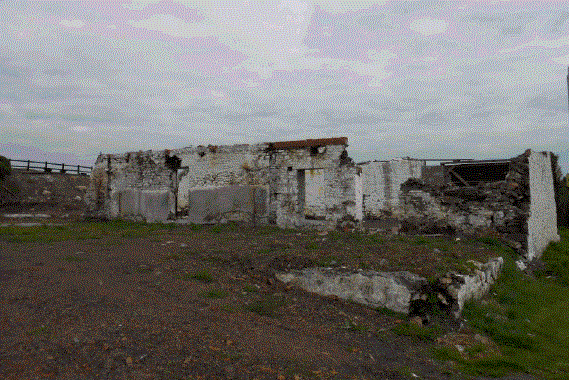
Work began on the conversion but at some point as the barn went from this;


to this;


..as the work continued, it eventually drew the attention of planning enforcement as it did not comply with the original permission, and the conditions had been ignored. There was now precious little left of the unique charm, historic setting, or anything else.

To try appease enforcement, another application was submitted which was largely based on new build.
This time the planning officers recommended to the committee, upon which Cllr Dole sat (with, I add, interests duly declared) that the application should be refused.
The new proposals were completely out of character from the original buildings and environment, and clearly against council planning policy.

Then the usual happened, a site visit was called for and last November the Magical Mystery Tour headed off to Pontyberem. The convivial group returned to the warmth of Chamber in the afternoon and, true to form, granted permission, contrary to the recommendation.

The Herald has spoken to the agent, a Mr Davies, who acted for the original application. He was not involved in the subsequent developments and is not best pleased that his name still appears on the later documents.

He also said that the structural survey which identified the barns as structurally sound was ignored to 'facilitate demolition'. Cllr Dole, or rather his wife, had argued that the demolition became unavoidable, but the agent is clear that he never saw a second survey to that effect.

The Herald asked Cllr Dole, or should I say Reverend Dole (for he is also a Preacher) to answer the allegations made regarding the planning process.

They asked whether permission had been granted for demolition, he replied that "demolition was undertaken with regards to safety and structural integrity of the building". A simple 'no' would have been a more honest answer.
He would not confirm the identity of the agent, or any changes of agent, just that the information was 'online'.
He also denied allegations that grants had been received 'in relation to works at the property'.

Mr Davies, the original agent sums up this very whiffy situation ;

 “A lot of people are aware that that this development is totally against council policy. People are coming up to me and asking me how he got permission when they can’t. When I tell them it’s nothing to do with me, they point out that I am still shown as the agent. I was still shown as the agent when it went back to planning in February 2015.

"Judging by the evidence, it appears Emlyn Dole is not playing the game everyone else in the county has to play, which is going through due process.

“When I see in the papers he is bringing transparency, it makes me ill.”

A local resident also spoke to the Herald;
 “It looks like one rule for him and one for the rest. Everyone round here calls it ‘Southfork’ because that’s what it looks like.”

In my opinion, the whole thing stinks.


The article is not yet online but the Carmarthenshire and Llanelli Herald websites can be found here and here and also on Facebook.


Tuesday, 11 August 2015

No Data breaches? Are you sure?


Interesting report published this morning from civil liberty group Big Brother Watch (pdf) concerning personal data breaches at local authorities across the UK. The information was compiled using Freedom of Information requests and covered the period April 2011 to April 2014.
Carmarthenshire council's response is recorded as 'No data breaches'.


Back in April last year when BBC Wales requested the same information, also through FOI, it reported that in 2013 alone, Carmarthenshire returned a response of five data breaches. I wrote about it at the time and unearthed a few of the details. I suspect that if by 2011 the chief executive was able to snoop on a councillor's emails without her knowledge there have been far more issues over the misuse of personal data than County Hall will ever let on.

Whatever the explanation, Carmarthenshire's latest response is a little puzzling. Perhaps it was the difference between BBC Wales making the request and the far more alarming sounding Big Brother Watch which caused the hurried realignment of the FOI goalposts. The council' recent response to a request from Press Gazette illustrates just how the spirit of FOI can be avoided, see Bending the Truth.


Aspirations, cycles and indicators


Towards the end of last week a press release was published on the council website announcing that the Annual Report and Improvement Plan had been published, I've mentioned this before as it has been some weeks wending it's was through the corporate channels.

This is the weighty document which the council is required to publish but nobody reads. For that reason a Summary is published, which also no one reads. A bit like the Carms News except it's not forced through the letter box.

To try and get anyone to read it, an even shorter version is supplied to the press office. It talks briefly about 'Key Improvement Objective Priorities' or KIOPs for short (I prefer Key Resource Allocation Priorities, or KRAP for short).

It mentions 'improvement cycles' and 'performance indicators' and of course 'severe budgetary constraints' and contains side by side, ridiculously unlikely 'quotes' from new Executive Board Deputy Leader buddies, Cllr Pam Palmer (Ind) and Cllr Dai Jenkins (Plaid).

In other words, the usual meaningless waffle. The six KIOPs are the six 'priorities' for the forthcoming year and are probably (apart from perhaps the second one) found in council 'priority' lists across the UK, after all, these are are standard expectations and you're unlikely to find a list aspiring to provide the opposite;

Delivering value for money and directing resources to front line services
Reviewing governance, decision making, openness and transparency
Supporting older people to maintain dignity and independence
Improving council housing stock and helping people access affordable homes
Improving school achievements
Tackling poverty

One can understand the Council churning out this predictable aspirational nonsense but I was quite struck when I read exact copies of the press release in the local press; Unquestioned and word-for-word. Even down to using "All actions and targets in the plan will be monitored throughout the year and reported on at year-end"
'Year-end'? 'End of the year' at least, surely.
As a rule, if a council press release is not related to a local flower show or a changes to bin collections, it is usually worth closer inspection to detect possible spin and excessive jargon before re-publication.

Anyway, back to those KIOPs. Naturally they include the stock phrases, 'delivering value for money', 'frontline services' and 'tackling poverty' to tick the right boxes and keep those 'external regulators' who 'validate this self-assessment' happy. We'll have to wait and see if the new Plaid 'led' administration immediately introduce the Living Wage and non-evictions for bedroom tax - two issues they campaigned for when in opposition...no sign so far though.

Hopefully 'delivering value for money' doesn't still include fraudulent payments to bump up the chief executive's salary such as paying his legal bills or providing him with a tax avoidance scheme. And presumably 'frontline services' doesn't still include the pet rugby club or swanky hotels.

The priorities to 'support older people' and 'helping people access affordable homes' are interesting as a brief delve into council minutes reveal which way the wind is blowing. For both of these the council is looking to outsource remaining services, either through a 'social enterprise scheme' or a 'wholly owned company'.

Whichever way you look at it, and the track record of Carmarthenshire promises neither due diligence nor a transparent process, the wheels are already in motion; the Leisure department is on the cards to be offloaded into a trust and democratic accountability and control will be reduced even further and profit rather than public service will become the priority.

The second KIOP is one of those priorities which apply exclusively to Carmarthenshire. I've probably said quite a bit about all that already...but notably, the recommendation for 'culture change' is again missing. The rules can be tinkered with and the deckchairs rearranged, but to change a culture as toxic and as ingrained as that found in Carmarthenshire is impossible with the cause of all the trouble still steering the Titanic. And no sign of a mutiny...

Saturday, 8 August 2015

Llanelli town centre - The End?


Much to the despair, I would imagine, of the struggling town centre, 'expressions of interest' are being invited to develop four plots of Council owned land squeezed in and around the Trostre and Pemberton out-of town retail park and Parc Y Scarlets stadium, Llanelli.

Involving around 16 acres, long leases are being offered for lump sums and rent to be paid in peppercorns and/or magic beans. One of the plots, which also happens to contain one of the only wildlife ponds for miles around, is currently occupied by council offices.

Presumably, as they currently own the land, it is rent free but this office is being closed and re-located to the Eastgate centre, where the rent won't be free.

Eastgate was another council led development in Llanelli and in their attempts to fill it's cavernous spaces, and to provide a nice little income for the global corporation which now owns the site, the council agreed to pay £250,000 per year, for twenty years, for office space.

Despite only being recently completed, the council then decided to spend £450,000 redesigning the office to suit it's needs. See here and here. The profligate spending continued of course with the notorious, and in my view undoubtedly fraudulent, 'Allowable Expenses' scandal.

More profligate spending has continued on the Parc Y Scarlets stadium, or more specifically, Scarlets' Regional Ltd, and has been well documented. Despite the fact that the rugby club, which is a private company of course, has been excused from paying a penny rent to the council due to it's debts, it enjoys regular injections of taxpayers money, courtesy of County Hall, for office rental and hospitality.

As the council continues to prop up its assorted white elephants by renting office space, it is only a matter of time before County Hall becomes defunct and the Chief Executive's Offices are relocated to that suitably holy environment of the evangelical bowling alley...

Anyway, I'm digressing slightly so back to Trostre and I must mention the council's official statement on the plan. What happens to councillors when they acquire power?  Cllr Dai Jenkins (Plaid) would, I think, when in opposition, have readily raised a concern or two over the negative effect on town centre trade caused by further out-of town development and it's abundant free parking and cheap rent.

But he is now the Executive Board Member for Resources and like Pam, Meryl and even the new leader, 'official statements' are, as per usual, straight from County Hall Central Command and the 'quotes' are pre-prepared b*****kspeak;

“It is currently too early to anticipate when these developments will take place as this would depend upon the nature of the proposals that are chosen. Our marketing of the sites, which are in prime locations surrounding the popular Trostre and Pemberton retail parks and Scarlets’ stadium have already attracted a good level of interest from across the property sector.” Cllr D Jenkins

So, with the council offering up this 16 acres of land, the ultimate plan to re-locate the town centre of Llanelli to the Great Sheds of Trostre and Pemberton is a major step closer. No longer will visitors and residents have to gather in the traditional streets of Llanelli, or in the traditional streets of anywhere else in Carmarthenshire for that matter, but will congregate in awe at the historic, aluminium clad surroundings of The Mark James CBE Stadium, and of course the Meryl Gravell Shopping Mall...

Friday, 7 August 2015

Friday's Herald - The Ombudsman's report

Further to Monday's post on this blog; Ombudsman; Council maladministration - Data Protection and mental health,
It's good to see that both the Carmarthenshire and Llanelli Heralds have covered this important story;

June wasn't a particularly good month for the council with the Ombudsman summarising another adverse decision in his quarterly report. This one also involved the health board, presumably Hywel Dda.

This was a 'quick-fix' settlement which enables the offending party, or parties, to avoid the publication of a detailed report by swiftly making amends.

Although the summary is brief, clearly there was a failure to follow the correct procedure under the Protection of Vulnerable Adults (POVA) policy;

"Mr X complained that his mother, Mrs Y, had not been treated with dignity and respect while a patient in one of the Health Board’s hospitals, and that the way in which she was handled amounted to an assault.
He also complained about failings on the part of both the Health Board and the Council in the way in which the subsequent POVA (Protection of Vulnerable Adults) investigation was carried out.
The Health Board and the Council agreed to apologise to Mr X for the failings in his mother’s care and in the POVA investigation, and to ensure that in future full details of a complaint are shared/sought when a POVA referral is made. The Health Board also agreed to arrange training in dignity/respect for all nurses on the ward in question." 
Ombudsman Wales

Readers may recall the Delyth Jenkins case a few years ago, covered on this and Cneifiwr's blog, when the Ombudsman published two scathing reports against the council. A vulnerable adult had suffered abuse at a council run day centre and the abuse had been reported by a care worker, Delyth Jenkins. To put it in a nutshell, the council went out of their way not to investigate the abuse under POVA or anything else, and the whistleblower, Delyth, suffered years of victimisation.

The damning reports were issued in 2009, and by the look of this 'quick fix' decision by the Ombudsman just a few weeks ago, the council are still failing the POVA procedures.

Turbine news...and Daff gets away with it


Another contentious ruling over a Carmarthenshire wind turbine was issued by the High Court yesterday. A Judicial Review brought by a local resident failed to overturn the planning permission granted by Carmarthenshire Council for 67m turbine destined for the village of Pencader, Carmarthenshire.

The Western Mail has a report here. This was particularly interesting as a second, virtually identical application was submitted by the turbine company whilst a Judicial Review was still considering the first approval. I mentioned this last December.

Whether or not a wind turbine 'spoils the view' can be a subjective matter depending on your stance on renewable energy but the visual impact of this one was described by one of the council's own planning officers as 'very unpleasant' to people living nearby. The planning officers then went on to recommend approval.

The 'view' was very much on everyone's minds over the Dylan Thomas wind turbine approval which was successfully quashed via a Judicial Review, brought by opponents earlier this year. This turbine was planned for farmland across the estuary from Dylan Thomas' boatshed in Laugharne and caused something of an uproar.

Planning officers had recommended refusal but after employing some jiggery-pokery and his undoubted, er, charm, former Chair of the Council and member of the planning committee Cllr Daff Davies (Ind) convinced the committee that the turbine wouldn't be seen from the poet's shed. They refused to visit the Laugharne of the estuary to check out the view and promptly approved the turbine.

A complaint was also made that Daff 'drove dangerously to the site visit'. The mind boggles.

Council webcast watchers may recall Daff Davies memorably bumbling stint in the Chair..

Although Daff declared an interest at various points (see the link to the new-fangled interweb member's declarations in this earlier post) his long friendship and personal and financial connections to the farmer on whose land the turbine would sit, or rather his uncontrolled enthusiasm, led to several complaints being made to the Ombudsman and a vote of no confidence from his community council. His support most definitely had nothing to do with a passion for renewable energy.

However, the Ombudsman has cleared Cllr Davies from breaching the Code of Conduct at planning committee meetings where the application was considered, although he may have breached the code at the site visit; he failed to declare a personal interest, failed to withdraw from the meeting and made oral representations when having a prejudicial interest and also when the public were excluded.

Quite why the Ombudsman couldn't give a definite yes or no over the site visit is something of a mystery as he is the ultimate arbiter. Anyway, the Ombudsman also decided that no further action was necessary. Daff lives to promote farmer's wind turbines for another day.

Wednesday, 5 August 2015

Record parking profits for Carmarthenshire Council


BBC Wales reports that for 2013-14 Carmarthenshire Council made a profit in parking income of £795,000, this is record amount for the council and up from £487,000 for 2012-13. It now ranks just 4th behind Cardiff, Swansea and (marginally) behind Gwynedd.

In the past twelve months or so Carmarthenshire Council has imposed increased charges, shelved Christmas free parking and introduced evening and Sunday charges so next years figures are likely to be even higher. In addition, higher charges and greater restrictions also bump up the income from penalty charges. All in all, the town centres have suffered and the motorist has become a lucrative cash cow.

Back in April a Council motion for a six month, two hour free parking pilot in Llanelli to try and boost town centre trade had cross party support and was kicked into the long grass of the Executive Board for their deliberations. They are apparently still deliberating and will report back in the Autumn.

The vandalism of ticket machines in Cardigan in June led to a reported 40% increase in town centre trade for the couple of weeks that they were out of action, not something I'd advocate of course but clear evidence of the benefits of free parking.
With these newly published figures, surely there will be no excuse for Carmarthenshire and a full review of excessive charges will be treated with urgency and the free parking pilot implemented without delay and extended to cover the whole of the county.

-----------------------------------------------------------

On a completely unrelated note, and nothing to do with parking at all, Madaxeman's latest blog post is well worth a read;

What of Justice?

Monday, 3 August 2015

Mark and Meryl's Masterplan


As this week's Herald reports (not yet online), an email has emerged addressed to Exec Board Member Cllr Meryl Gravell thanking her for her 'spiritual and practical support' from a Mr Tony Rees. Mr Rees most recently featured in the Herald's video about the Parc Howard meeting and attended, when it was eventually disclosed, as a representative of Loca Ventures who had designs on the mansion.

As the Herald reported last week, a member of the Parc Howard Association disclosed that it was Meryl Gravell who had recommended Loca Ventures to Ken Rees, the Chair of the PHA.

This email however, which is also copied to senior council officers Wendy Walters, now Assistant Chief executive and Jonathan Fearn, Head of Corporate Property, is not thanking Meryl for her efforts to offload Parc Howard, but pre-dates the Parc Howard 'interest' by twelve months.

Significantly the subject line of the email refers to 'Pembrey Country Park' and the airport which, along with other areas of land within the Mark James and Meryl 'Masterplan', were part of the original ambitions of Loca and it's assorted associates and tangled guises. Only more recently did their focus concentrate on Parc Howard.

With the email dated May 2014, this was, as I said, a year before the Parc Howard fiasco unfolded and the rest of the council, and public, became aware of the interested parties and clandestine discussions. The email suggests that Meryl contacts the writer by email or mobile which suggests that the two had become quite well acquainted and that commercial ambitions went much further than Parc Howard.

As Unison warned back in July 2013 when 'expressions of interest' were invited regarding Pembrey Country Park;  "There is a very real risk of developers being given the land for a pittance, applying for and receiving planning rights, which would boost the value of the land and simply cashing in."

Back then, in 2013, a hysterical, yet 'anonymous' Council spokesperson (this statement has Mark James written all over it)) screamed from the Press Office that;

"Unison's claims are complete and utter tosh and scaremongering. This is same old same old rumour and fabricated diatribe that is resurrected every few years that has absolutely no foundation at all. It is a downright and cheap-shot lie that the park is for sale, designed to provoke anxiety."

It would seem that Unison were quite right to be concerned as, if nothing else, discussions with assorted interested parties (which, as reported by the Herald seem to consist of a few recurring names) over the future of these tracts of land have been ongoing, without any reference to full council, for some time. In other words, the press release was not only offensive, but a lie.

Back even earlier, in April 2012, an item titled Pembrey Peninsular Masterplan appeared on the minutes of an Executive Board meeting. The Item was, surprise surprise, exempt from the public and press (it wasn't on the published agenda either).

The minutes record that the chief executive referred to a 'potential purchaser' of the airport and surrounding land within the Plan and sought agreement to continue discussions. With Meryl as leader, and the unpublished report 'discussed' in secret, agreement to carve up Carmarthenshire was, like tax avoidance scams and libel indemnities, never going to be hard to find.

To be honest, I wouldn't trust Mark or Meryl with a small garden, never mind a county and a 'Masterplan'. However, the issue of course is the usual lack of due diligence, openness and of keeping the public fully informed. With private companies hiding behind claims of commercial confidentiality, and the council hiding behind anything it can, it is incredible that yet again it takes investigative journalism to uncover information and plans that should already be, even in summary form, in the public domain.

Herald Facebook page here

Cllr "Mad" Meryl Gravell


Ombudsman; Council maladministration - Data Protection and mental health


(Later post 7th August; Friday's Herald - The Ombudsman's report)

Another complaint to the Ombudsman made against Carmarthenshire Council has been upheld. The complaint relates to Adult Social Care and the decision was issued in June.

In summary, the matter has been ongoing since October 2011 and is both complex and very sensitive. It is also of wider interest as it concerns Article 8 of the Human Rights Act (Right to a private life), Data Protection and the common law principle of confidentiality concerning a person suffering from mental health issues.

The Ombudsman summarises the case thus;

Summary 
Mr B made a complaint on behalf of his adult daughter Ms A, who lives in a supported housing project. He complained that the Council had copied, used and kept on file a copy of Ms A’s personal writings without her knowledge or permission. The Council had been asked to remove the copy of Ms A’s writings from her records but it did not agree to this. 
The Ombudsman found that Ms A’s writings had been copied from her personal notebook, left open in a communal area of the project, by project staff who were concerned by the nature of the content. They had shared it with Ms A’s then care coordinator. A decision was taken that the content did not indicate risk and the writings were not to be kept on file.  
It seems that an electronic copy was inadvertently kept, which over a year later appeared appended to a social services report to a mental health tribunal. The writings therefore remained permanently on Ms A’s file as part of this report.  
Ms A had requested that they were removed, but the Council stated that they were relevant to future care and they would remain on file. 
The Ombudsman upheld the complaint. Whilst the retention of the document was ultimately a decision for the Council, there were several reasons that the Ombudsman cited for concluding that retaining Ms A’s personal writings seemed to be disproportionate. These were that: 
1. The writings are Ms A’s own sensitive personal data; they were not intended to be seen or copied in the first instance; 
2. The initial decision was that the writings did not indicate risk and should not be kept on file; 
3. Ms A had requested their removal; 
4. They were not in the correct context in the social services report; 
5. They did not add any specific information relevant to Ms A’s current and future care and support needs. 
The Ombudsman recommended that the Council apologise to Ms A and review its service agreement with the supported housing provider. The Council also agreed to remove the copy of Ms A’s writings from her file. 
The Ombudsman records Ms A's progress and the succession of care coordinators but significantly the Mental Health Tribunal scheduled by her third care coordinator for December 2012 was in relation to the detention of Ms A under the Mental Health Act and the copy of her writing, typed out by staff at the home had been attached to her file, without her knowledge, in the Council's submission. In the event the Tribunal was not considered necessary but her writing remained on her file.

Mr B made several complaints to the council that Ms A's private writings were being used by Social Services without her knowledge nor consent. He also considered that the writings were irrelevant having reflected her condition several months before the Tribunal and that Ms A's Human Rights to the privacy of her personal writings had been breached

In September 2013 Ms A signed a statement;
“This is to confirm that I have not given permission for my private writings to be circulated and used by anyone and that I would like them removed from my files and an assurance that unless I am a genuine risk to myself or others, my privacy be respected at all times”.

The Council continued to refuse to remove the writings from her file. They contended that both it, and the care provider had acted correctly in attaching the copy to the file as it was pertinent to her mental care. They also argued that the writings had not been discussed with Ms A as she was not well. Data Protection exemptions to not seek consent had been used to 'protect the vital interests' of Ms A and the decision was, they claimed, in line with the Human Rights Act which qualifies that privacy may be breached “in accordance with the law and ...necessary... for the protection of health”

The Ombudsman's analysis and conclusion makes it clear that it is not within his power to determine a breach in the law, only whether the Council were guilty of maladministration. The issue was whether or not the council had acted reasonably and proportionately in striking the correct balance between the right to confidentiality and any appropriate disclosure.

The Ombudsman concludes that the records from the first care coordinator show that there was no intention of making or keeping a copy at all. The fact that the writings were 'inadvertently' copied and kept shows a failure to understand the meaning of 'not kept on file'. In such a case all copies should have been deleted or destroyed.

As it happened the writings were copied and kept and found their way onto the Tribunal file. The Ombudsman found that they were not placed in the context of Ms A's current mental health and were further misrepresented in that they incorrectly attribute the writings to the 'summer' 2012, rather than October 2011.

Whilst the Ombudsman believed that Ms A should have been told that her writings had been copied and used in this way, even as a matter of good practice - he points out that Tribunal reports are disclosed to the subject anyway so she would have then become aware of the contents eventually. Which is exactly what happened.

He states that even if concerns were raised over the writings it was not necessary to keep a verbatim copy, the issues raised could have been discussed verbally in general terms as part of the care plan. The Council could have noted any relevant concerns without keeping the whole copy - which shouldn't have been kept in the first place and;

No member of staff sought to inform or discuss with Ms A at any stage that her diary entries had been seen or subsequently been used in the report. This should have been discussed with her.

The Ombudsman disagreed with the council and found that in keeping the personal writings the first principle of Data  Protection had been breached; they had not been processed fairly. Neither did the retention of the writings add relevant or specific information to current or future care, her vulnerability was already demonstrated in her clinical and care history outlined in the Council's response..

The writings were not intended to be seen or copied by staff in the first place and the initial decision not to keep the writings on file should have been followed, and additionally the context and dates were incorrect.
In addition, Ms A herself was upset by the inclusion of her own personal and sensitive writings in her records and had requested their removal.

The Ombudsman states that the writings have now been removed and the Council have been ordered to apologise to Ms A. The Ombudsman also suggested that the care provider issue further training and guidance to its staff regarding issues of confidentiality and data protection.